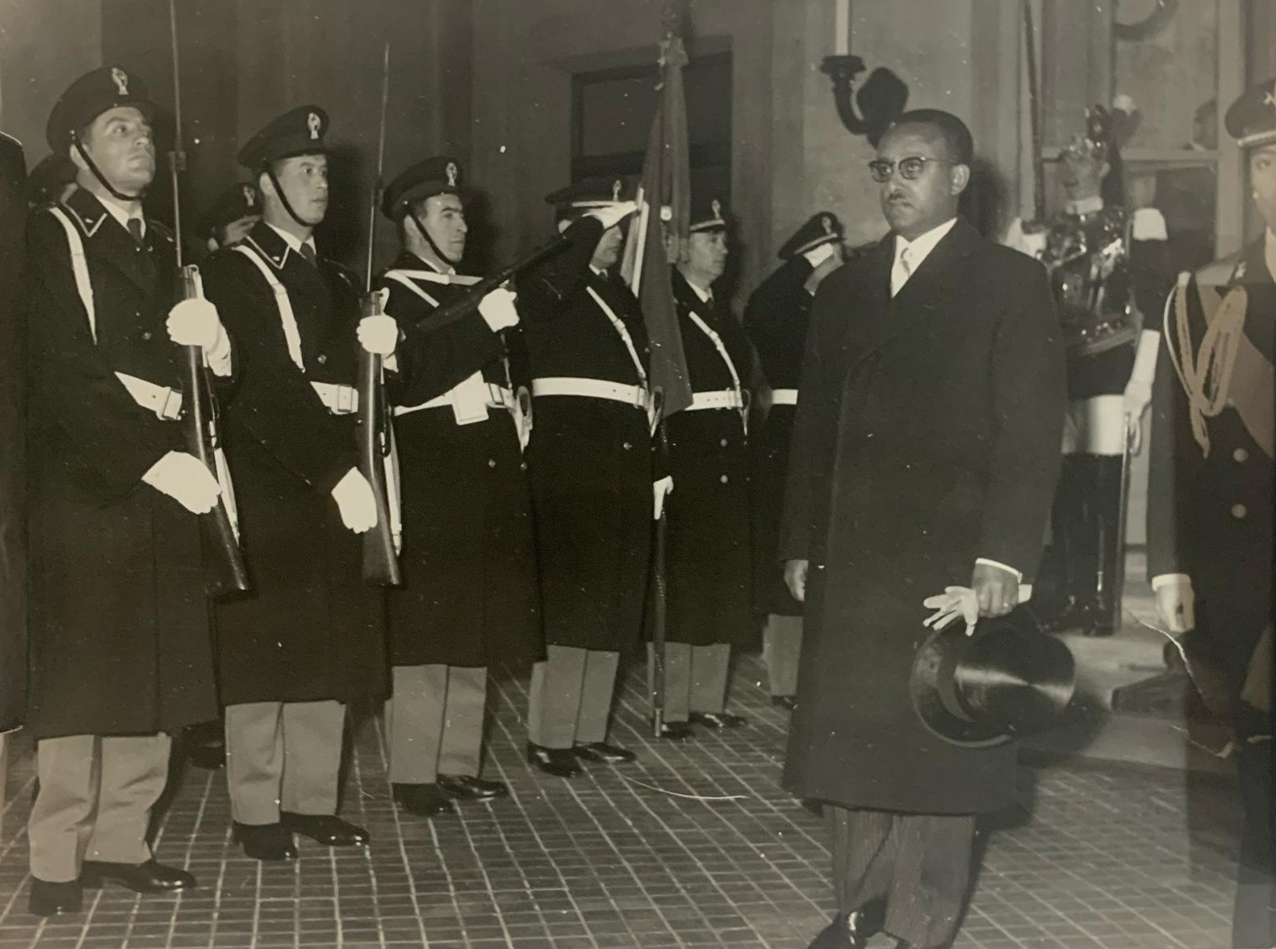
The ship weighed anchor and headed toward Sardinia. About fifteen to twenty armed carabinieri escorted us. Having passed by La Maddelena, an island with coastal artillery and the town of Cagliari we got on the big seas. As we got close to shore after traveling aboard the boat for about three to four hours, they brought a burlap sack full of chains and shackles and emptied it in front of us. The rumor of being imprisoned was turning out to be true. We were shocked and dismayed. They immediately cuffed our hands and shackled us together in a chain gang. We disembarked at the port town of Civitavecchia. Using a covered vehicle for transporting prisoners, they made several trips back and forth, taking us to the train station. During our transfer from the ship to the vehicle, the people of the town were gathered around cheering in applause, showing their approval. We felt that just as in ancient times the Romans would parade their prisoners in public carrying a yoke, seeing us prisoners in shackles gave the Italians a sense of pride and joy. They treated us like common criminals, when we had committed no offense. They had forcefully and violently seized our country from us. We surrendered peacefully and had not even resisted with violence. Yet, they were humiliating us.
We got out of the car when we got to the station. They had us wait there until all of us arrived in our respective groups, after which they made us board the train and we started our journey. An armed soldier sat next to each one of us. After traveling in this fashion for some time, we arrived at Rome Termini station. Once we got to Termini, they had us disembark and they took us to a room. They locked it up with us inside. After a couple of hours, the door opened and we were made to board another train. They only gave us bread for lunch, and we ate it with our hands still in chains. We travelled all night and reached the small seaside city of Rossano. A few buses pulled up which we boarded, and we continued our journey.
The road was lined with gravel. The terrain we travelled across was hilly and had many cliffs with a lot of wooded areas and shrubs. There weren’t too many houses or farms. It was a hilly, parched area that was quite similar to the southern part of France. We were in a city called Calabria, which is located at part of the map of Italy that looks like a shoe. We passed through a plateau, connected to a larger one named Sila. After traveling from Rossano for a couple of hours we reached a small town that was built on the edge of a cliff. When we reached the town center, thousands of people, men, women and children—were gathered waiting for our arrival with a lot of commotion. One could surmise from their behavior that, no black person had ever been seen before in these parts. Some of the women and children even looked scared and amazed upon seeing us.
Once we got off the buses, we walked single file into a large house. Inside the house were officials who were standing, waiting for us with an air of arrogance. The local administrator (podesta) said, “Welcome to Italy! …You are free here. You are not prisoners. “ The shackles were removed for us. Our hands were so swollen that many of us had trouble taking the shackles off. Several women were watching us through the bars in the windows and wiping tears from their eyes.
Once the shackles were removed we were led to our living quarters. Other than the ground floor, the building had two stories and was built like apartments. Depending on the size of the room, there were three, four and six beds in each. We selected our partners and settled in. I shared a room with Kosroff Boghosian and Monsieur Abraham Korajian. Aside from the fact that the room was small, it had a small fireplace which came in handy in the winter months.
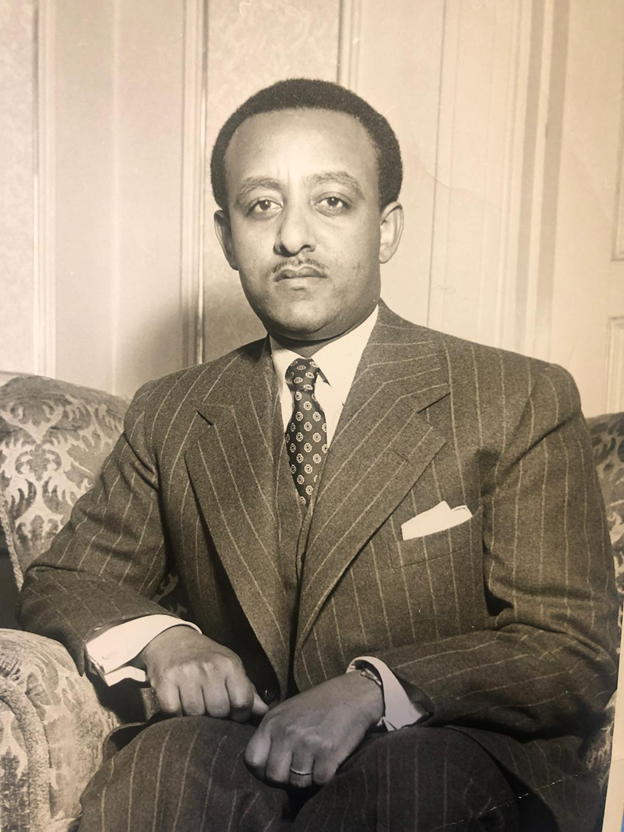
Our beds were made with clean sheets, a blanket and even a bedcover similar to that of a hotel bed. Three young Italian men were designated to make our beds, clean the rooms and run errands for us. Their names were Alberto, Cataldo and Salvatore. Each bedroom had a balcony and in the back was a spacious veranda. There was a washroom on each floor. There was also a small rooftop terrace to get fresh air.
When I looked at the landscape I was stunned by its location. I later heard that the previous name for Longobucco was Temesino. It was founded by the French in The Middle Ages. The French were later gradually dominated by invasions and conflict with the Spaniards, Bourbons and the Arabs.
Three quarters of the town was surrounded by cliff. The remaining side is surrounded by forests and mountains. The entire area is encircled by the plateaus that it is impossible to see anything other than mountains and the sky so much so that it seems like one deep crevice. Indeed, the name Longobucco translates to long hole.
I began to get concerned that although for the time being we were free from the shackles, we must have been placed in such a desolate and remote place because they would not be freeing us anytime soon. Once we settled in our places, we were all summoned to the carabinieri’s main office. When we arrived, we went in one by one, where the marshal and his assistants were waiting, and gave the usual fascist salute. They registered our names, along with our ages, ethnicities, line of work and religion. Upon answering the question regarding religion, we were amazed to see the sycophantic behavior displayed by a couple of the elders among us who betrayed their own to claim what they were not, demonstrating how integrity at the time was beginning to get tested in some quarters. Blatta Kidane Mariam Aberra translated for us the rules by which we were to live.