
Introduction
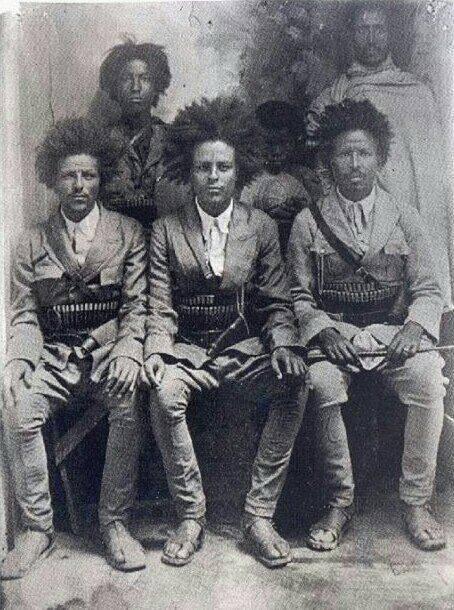
The Tikur Anbessa of Ethiopia came to existence as a resistance group at a time when fascism was rearing its head and Italy was trying to capture what it had lost during the Scramble for Africa at the Battle of Adwa. More than just a resistance group—The Tikur Anbessa was a symbol, a living testament to organized struggle against oppression. Having emerged even before the French and Italian resistance movements, Tikur Anbessa predated the anti-fascist movements of Europe. Although its existence was brief and the number small, its legacy was historic, as the first structured anti-fascist resistance movement and arguably the first organized struggle against oppression in Africa during the 20th century.
Its story, though often overlooked, embodies Ethiopia’s national pride and collective memory, representing a disciplined, institutionalized resistance against colonialism. Its members combined modern political thought with elite military strategy under the harsh realities of fascist brutality, creating a narrative that remains inspiring to this day.
Who Were the Tikur Anbessa?
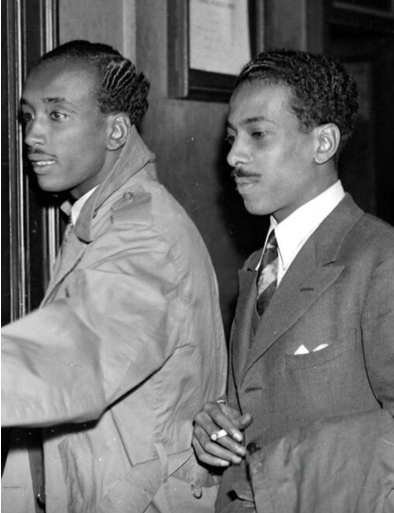
The Tikur Anbessa was founded in Western Ethiopia in 1935, following the fall of Addis Ababa and Emperor Haile Selassie’s exile. In the wake of his departure, the struggle shifted to guerrilla warfare, and the Tikur Anbessa emerged as a distinct movement. Its members came from three groups. These categories had some overlap.
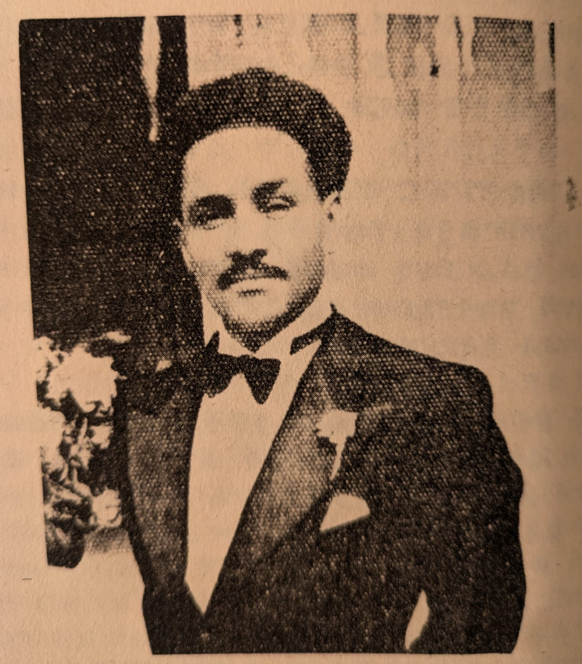
The group consisted of a rare blend of military training, foreign education, and elite leadership—critical elements in a highly diverse empire. Their leader, Alemwork Beyene, a veterinarian educated in Britain, exemplified their combination of intellect and discipline.
From their inception, The Tikur Anbessa adhered to a strict code of conduct- a defining feature that set them apart from often fragmented anti-fascist groups in Europe that came later. Their sole focus was the service of Emperor and country. They sought to avoid the chaos of guerrilla warfare and embodied the belief that the elite must share the same risks as the people.
Guiding Principles
Political supremacy—warriors must serve the nation, not personal ambitions.
Absolute loyalty—soldiers must revere the Emperor as the living symbol of national unity.
No surrender—capture is unacceptable, and death is preferable.
No retreat or exile—leaders must never abandon their country.
Civilian protection—forces must maintain moral legitimacy at all costs.
Humane treatment—captives must receive mercy, even Italian prisoners.
Strict discipline—rogue actions will not be tolerated within the hierarchy.
Educated leadership—commanders must ensure thoughtful, strategic decisions.
Continuous resistance—fighters must commit to the cause regardless of setbacks.
National unity—regional, ethnic, and personal divisions must be set aside.
These principles emphasized political supremacy over the military, moral treatment of civilians and prisoners, and unwavering commitment to the nation— a framework unparalleled at the time.
Their Role in the Resistance
Though members operated across Ethiopia, the Tikur Anbessa primarily organized resistance in the west, rallying support for Ras Imeru, whom they elected as their leader after the emperor’s exile. When Addis Ababa fell and Emperor Haile Selassie was defeated at Maichew, many soldiers fled into forests and mountains, armed but leaderless. It was in this chaos that the Tikur Anbessa emerged as a disciplined, educated force, hoping to guide the scattered fighters - military and civilians alike. Their vision of unity and order tried to give coherence to fragmented resistance, and even their brief existence left a lasting mark.
The Nekemt Incident
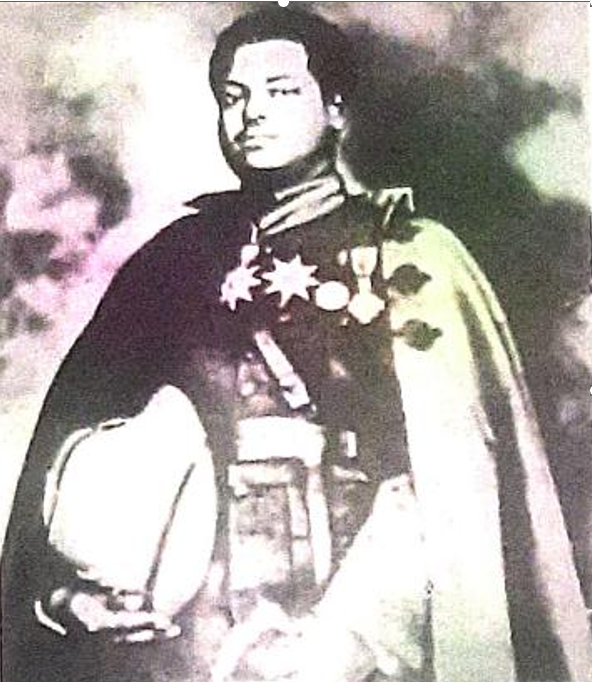
The most well-known chapter of the Tikur Anbessa history is the Nekemt Incident of December 1936, also referred to by the Italians as the “Nekemt Massacre”. After Addis Ababa fell, a cohort of Tikur Anbessa members sought refuge in Nekemt, Wellega, which was ruled by Dejazmatch Habte Mariam Kumsa. Also present were Blatta Deressa, a Wellega nobleman, and his son Yilma who was a member of Tikur Anbessa. Dejazmatch Habte Mariam had welcomed the Tikur Anbessa on condition they do not provoke the Italians because retaliation would be severe.
At the time, Italy, under Marshal Badoglio, sought to consolidate control of the country by pacifying provincial leaders. While in this process, Badgolio was replaced by Graziani who was known for his brutal suppression in other places such as Libya.
A delegation of Italian airmen arrived in Nekemt for negotiations. Upon learning of their imminent arrival, the members of Tikur Anbessa engaged in a heated debate amongst themselves and ultimately the military wing won this argument. They then attacked the Italian delegation. The Tikur Anbessa destroyed three airplanes and killed all the airmen on board, including the deputy Air Marshal Vincenzo Magliocco. In retaliation, the Italians bombed and took Nekemt and, in a tragic irony, forced Dejazmatch Habte Mariam to join their campaign against the Tikur Anbessa. Shortly thereafter, they poisoned him to death.
The Tikur Anbessa who survived the attack, left Wellega eventually joining Ras Imeru, who, though still nominally the imperial military leader, had been gradually forced into retreat. But this was no ordinary retreat. It was heavy with the burden of a collapsing world—fighters moving alongside women, children, the elderly, and the wounded. It was a column of survival more than strategy, and because of this, movement became slow, exposed, and painfully difficult to conceal.
Under such conditions, survival became impossible. In January 1937, Ras Imeru surrendered, bringing organized resistance to an end and effectively dissolving what remained of the Tikur Anbessa.
Several members, including seven Tikur Anbessa, were captured alongside Imeru and flown to Addis Ababa. Of this group, two people, Yilma Deressa (later Ambassador and Minister of Finance) and Haddis Alemayehu (later Ambassador to the UN and literary giant) were taken to Italy with Ras Imeru—a transfer that paradoxically spared their lives. Other members of the Tikur Anbessa were not as fortunate. Kifle Nessibu and Ayana Biru, an engineer, were killed while attempting to escape from a moving bus.
The remaining members were also killed at different times, especially in the aftermath of the Yekatit 12 events and the assassination attempt on Graziani. The two sons of Hakim Workneh, Benyam and Samson, were dragged from their mother’s home and executed. Fekade Selassie Hiruy was also taken from his residence, shot, and his body was burned. Meshesha Gebru was torn from his sister Senedu’s arms and summarily executed.
The violence of Yekatit 12 was just as random as it was systematic and well-planned. While Graziani had issued orders for every black person to be killed, his order clearly targeted the very elements of society that the Tikur Anbessa represented: educated Ethiopians, trained officers, and individuals capable of organizing resistance. In many ways, it was an attempt to erase not just a people, but possibility itself. Under Benito Mussolini’s brutal fascist occupation, the resistance fighters were systematically hunted down and killed.
The Tikur Anbessa and the Arbegnoch
The Tikur Anbessa were never the entirety of Ethiopia’s resistance. They were a brief but intense intellectual and organizational vanguard—an attempt to bring structure, discipline, and national coordination to a scattered uprising. Alongside them stood the broader arbegnoch, the patriots: a vast, decentralized resistance made up of peasants, regional nobles, former soldiers, and local militias who rose across Ethiopia, making heroes of common men and women after Maichew and who fought on until liberation in 1941.
While these patriot warriors were rooted in local survival and traditional leadership, the Tikur Anbessa represented a modern, national vision. At times, these two worlds aligned; at other times, they clashed—one shaped by immediacy and terrain, the other by structure and ideology. Together, however, they formed an indisputable body of resistance against occupation.
Final Reflections
To this day, Tikur Anbessa remains in the conscience of a nation that sees it as more than a failed movement. It endures as a flicker of what could have been—a disciplined, unified vision of resistance that was extinguished before it could fully take shape.
Its members were not only fighters. They were an unrealized political hope, a generation of thinkers and soldiers who believed that even in the darkest period of occupation, dignity could be organized, resistance could be structured, and a nation could still be held together by principle rather than fear.