
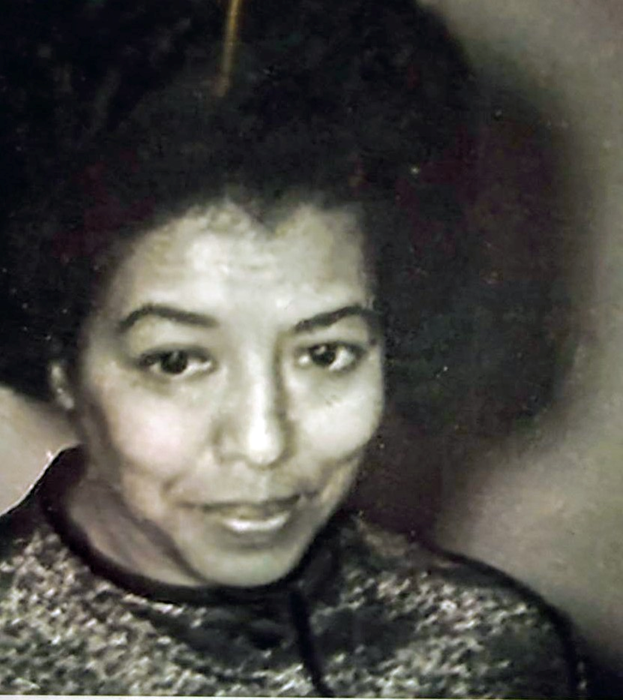
Educator, resistance fighter, parliamentarian, playwright, and passionate advocate for women’s rights, Senedu Gebru was a pioneering figure in Ethiopian public life. Born in 1915, Senedu was one of the first Ethiopian women to have received an education in Europe. Fluent in multiple languages by the time she returned home, she infused her knowledge of history and love of literature with a deep commitment to service of her country.
At the start of the Italian occupation, she joined the Tikur Anbessa resistance movement as its first woman member. Ras Imeru, who was the leader of the movement, was not convinced. He strongly encouraged her to leave the country, go to Europe and pursue her education. At the time her then husband, Foreign Minister Lorenzo Taezaz, had accompanied the emperor and was living in exile in Europe. She declined, citing her commitment to the oath she had taken to never abandon the resistance under penalty of death. She managed to convince Ras Imeru that she did not have to go into combat to be of service to Tikur Anbessa, but that with his support she could start a Red Cross unit to provide assistance to the wounded.
Following the failed attempt on the life of Marshal Graziani, the young Senedu lost two of her nephews, Debebe and Hailu, both under twenty-one years of age, and her younger brother Meshesha, along with many other members of the Tikur Anbessa to summary execution by Graziani’s forces. Shortly thereafter, Senedu and many of her family members were captured and sent as prisoners to Asinara. Conditions were harsh, and the isolation was profound, but Senedu met these challenges with extraordinary resilience.
Denied books in familiar languages, she taught herself Italian so that she would be able to continue reading, turning an obstacle into an opportunity for learning. She became an advocate for her fellow prisoners, campaigning for better living conditions, particularly for her female prisoners. She also watched over her siblings, preventing one, Desta, from fleeing to a convent on the island.
On Asinara, Senedu forged lifelong friendships with her fellow prisoners, based on a shared loyalty to country and yearning for liberty. Her experiences in Tikur Anbessa and captivity on Asinara later inspired Yelebe Mesehaf (“The Book of My Heart”), a play about the Italian occupation and Ethiopian resistance.
Her time as a member of Tikur Anbessa and on Asinara foreshadowed a life of service to her country. Her surrender was a source of great regret throughout her life. She felt that she should have fought to the bitter end. She resolved to make her survival worthwhile by dedicating her life to service to her country. Among her numerous public roles are her service as headmistress of the country’s first girls’ school (Empress Menen School), she was the first female vice president of the Ethiopian Parliament, and an active member and vice president of the Ethiopian Red Cross/Crescent. She was a leading member of Ethiopian Women's Charitable Association and the founder of the first self-help organization of Ethiopians living with disabilities.
Senedu married Major Assefa Lemma, (later Ambassador) in the late 1940s and continued her public service while raising four children. She passed away in 2009 at the age of 94, leaving behind an exemplary legacy of resilience, courage, and service.
Her time on Asinara stands as a testament to the human capacity for survival in even the most trying of circumstances. Though a prisoner herself, Senedu’s strength and compassion not only sustained her family and fellow prisoners but became the defining chapter of a life dedicated to her country and its people.