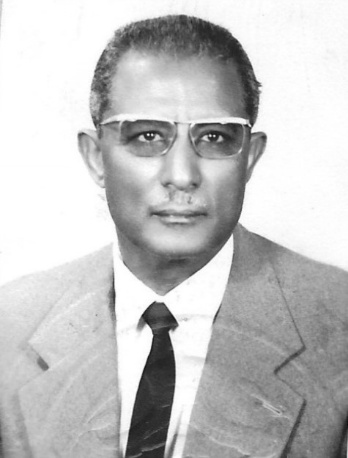
Early Days
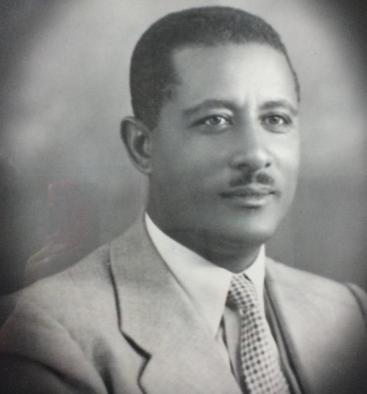
Ato Mekonnen Wolde Yohannes was born in Addis Abeba on July 20, 1905, the son of Weizero Weder Yelesh Wolde Gebrel and Ato Wolde Yohannes Nadew. His mother was from Menz and his father from Bulga to Addis Abeba. His father ran an artisanal leatherworking business crafting saddles and leather cases for swords. His mother ran a small storefront business. He had three brothers and one sister. The family lived in a sprawling compound in the Kebena neighborhood where the home still stands today. He received his first education in traditional church school. After completing church school, he went on to the Menelik II School in Addis Abeba. The curriculum was primarily taught in French with core academics in mathematics and science. Ato Mekonnen excelled in the new language and mathematics. This early exposure would define the rest of his life. He became a businessman in Addis Abeba, building his own livelihood through the same steady industriousness that his family and teachers had instilled in him. It was an ordinary beginning, but it laid the groundwork for a life that would prove anything but ordinary.
A Nation Under Siege
That quiet, industrious life was interrupted in 1935, when Fascist Italy invaded Ethiopia. Ato Mekonnen took up arms alongside Emperor Haile Selassie and his own older brother, Tsehafe Teezaz Wolde Giorgis Wolde Yohannes, joining the defense of his country on the battlefield. He was wounded at the Battle of Maichew on March 31, 1936, one of the fiercest engagements of the war and a turning point after which organized resistance shifted from the open field to patriotic guerrilla warfare. The war exacted a heavy toll on his family. His father was killed by the fascists for supporting the resistance, and his older brother left the country in the emperor’s exiled retinue. At a young age, Ato Mekonnen found himself the guardian of his extended family, carrying the full weight of its welfare while continuing to covertly serve his country. He balanced these two duties, one to family and one to nation, in a time when either alone would have been a full burden. Ato Mekonnen adapted once again, becoming a clandestine member of the Patriots, the underground resistance that kept the spirit of Ethiopian sovereignty alive through the five years of occupation.
He was captured and sent to the Asinara prison camp after the attempt on Marshal Graziani’s life on February 19, 1937. He remained there until May 1939, when he was transferred to Mercogliano. Many of the prisoners were repatriated in late 1939 or early 1940, ahead of Ethiopia's eventual liberation in 1941, and it is believed that Ato Mekonnen was among them, though the family does not know the precise date of his release.
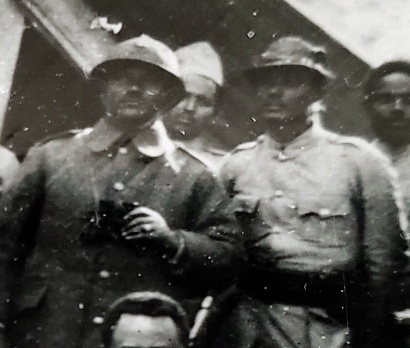
We note from Ato Mekonnen's own accounts of Asinara that the years there were hard for him, as they were for so many of his fellow countrymen, women, and children held in isolation. Yet even such removal and imprisonment did not dull his resourcefulness. He learned to speak Italian. He and some of the other prisoners were placed in vocational training. The training reflected both the prisoners' social status and the colonial objective of preparing them to serve as a labor force. Ato Mekonnen was trained in tailoring and carpentry. He was assigned to sew clothing and uniforms for prisoners working in the fields and in domestic service. He also learned carpentry, making chairs and tables for use in the prison. Ironically, years later, after falling out with Emperor Haile Selassie and being imprisoned, he once again used his tailoring skills—this time to make clothing for his own children.
Ato Mekonnen devoted himself to learning so that, even when stripped of freedom and family, he would still have something of lasting value to offer.
Rebuilding a Nation
When Ato Mekonnen made his way back to Ethiopia, he did not return to the quiet life of business as he knew it before. Instead, he joined his older brother to serve Emperor Haile Selassie's newly re-established government, choosing to offer his skills and expertise in the work of rebuilding a country that had been scarred by occupation. His contribution in these early years was substantial and lasting.
He was assigned to administer compensation funds in the aftermath of the war. He also oversaw the upgrade of the Abba Samuel Hydroelectric Plant, the first power plant in Ethiopia, adding new turbines to expand its capacity at a moment when the nation's infrastructure needed every advantage. From there, he helped spearhead the establishment of the Ethiopian Electric Light and Power Authority, serving as its first managing director. Under his direction, the Authority built its corporate headquarters in the heart of Addis Abeba's Piazza district. He was also instrumental in establishing the Lion Bus, the city's first public bus system, extending the reach of ordinary residents throughout a modernizing Addis Abeba.
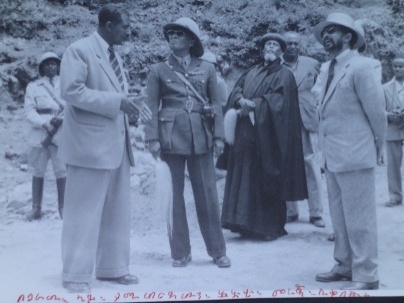
He worked for the newly established government from the mid-1940s to the early 1950s, in different capacities, all aimed at building the structural framework of a nation. The power struggles and political currents of the time pitted those who sought adherence to the old ways against those who envisioned change. He and his older brother, Tsehafe Teezaz Wolde Giorgis, were caught up in the tension and demoted. Ato Mekonnen was imprisoned and exiled for over 15 years by the Haile Selassie government. It is worth pausing on what this arc represents: a man born to modest circumstances, educated first in a church school and then in one of Ethiopia's earliest modern academies, who fought for his country, lost his father and his freedom in that fight, endured years of imprisonment far from home, then returned and spent his early days building the very institutions and public infrastructure that would carry Ethiopia into the future, before he ultimately lost favor and power. His story captures the story of a generation of Ethiopians who refused to let occupation define them, and who came home from war determined to build and make changes rather than simply to recover.
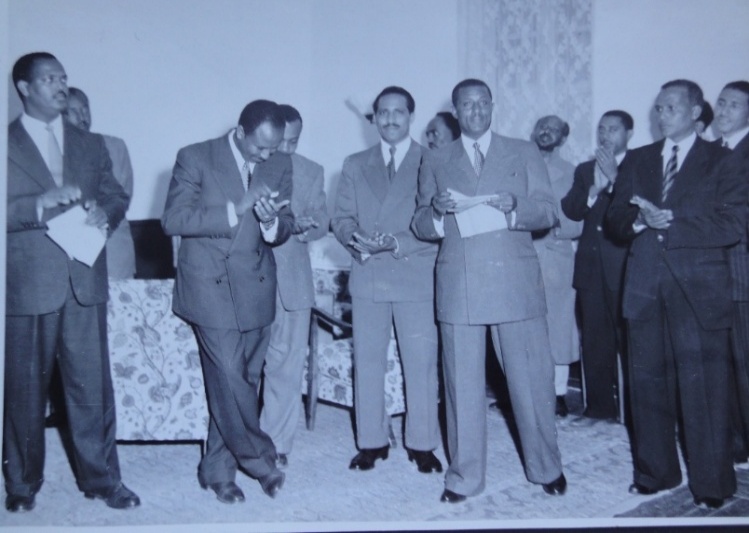
Family and Later Years
Ato Mekonnen was married to Woizero Konjitte Zewge, and together they raised ten children: Konjitte, Moges, Mesrak, Nikodimos, Tiyint, Getabecha, Laketch, Aster, Gebyanesh, and Asseged. He was a strong family man and he was blessed with many grandchildren in his later years. Like his career, his household reflected the same values that had carried him through war and imprisonment: hard work, resourcefulness, and a quiet devotion to the people in his care.
After his years of government service came to an end, Ato Mekonnen did not slow down. He ran a successful dairy farm in Addis Abeba and remained, to the end, a highly skilled carpenter and mason, forever building and rebuilding around his own house and within his community, the same hands-on craft he had first picked up as a prisoner on Asinara now put in service to his own household and those of his neighbors. He died on December 28, 1990, at the age of eighty-five, and was laid to rest at the Holy Trinity Church in Addis Abeba.