We, the members of From Oblivion to Memory, join together to collect, preserve, and document the complete history of all forcibly removed Ethiopian prisoners of the Italo-Ethiopian War. Our mission is to preserve our history, strengthen our bonds and work on shared projects that benefit present and future generations.
About Us
Mission Statement
Who We Are
From Oblivion to Memory (FOM) is a nonprofit organization founded by descendants of Ethiopian prisoners of the Italo-Ethiopian War, together with scholars, researchers, families, and allies dedicated to recovering and preserving a history that remained largely hidden for nearly a century.Our community includes the children, grandchildren, great-grandchildren, and further generations of the Ethiopians imprisoned and exiled following the Yekatit 12 massacre of 1937, many of whom grew up with only fragments of this history: a name, a photograph, a story half-told. But FOM is not a family circle alone. We bring together historians, archivists, and researchers in Ethiopia, Italy, and the diaspora, cultural mediators, educators, and institutional partners, as well as anyone with a genuine interest in Ethiopian history who wishes to help bring it into public memory.Together, we work to:document and preserve the complete history of Ethiopians imprisoned during the Italo-Ethiopian Warcollect and safeguard archival materials, family documents, oral histories, photographs, diaries, and testimonies before they are lostrestore names, identities, and biographies to individuals erased or marginalized within official historical narrativesstrengthen intergenerational memory by connecting descendants, families, and communities separated by time and geography
What We Know
Following the Yekatit 12 massacre of 1937, fascist authorities carried out widespread arrests targeting nobles, intellectuals, military leaders, clergy, and community figures considered capable of resisting colonial rule. Hundreds of Ethiopians were forcibly removed from their homeland and exiled to detention camps and prisons throughout Italy, including the island penal colony of Asinara in Sardinia.Many of these prisoners never returned home. Others returned years later carrying memories that were painful, incomplete, or difficult to communicate. Their stories became dispersed across archives in Italy and Ethiopia, or survived only as fragments of memoirs, family recollections, and long silences. For generations, descendants often knew only that a father, grandfather, uncle, or ancestor had disappeared during the occupation or had died somewhere in exile. In many cases there were no graves, no records, and no public acknowledgment of what had occurred.Through archival research in Italy and Ethiopia, cross-referenced with memoirs, testimonies, and family records, we are gradually reconstructing the circumstances of the arrests, the conditions of exile, and the fates of those who were imprisoned .Each name recovered, each document uncovered, and each testimony gathered helps restore a fuller understanding of this largely forgotten chapter of Ethiopian and Italian history.
What We Care About
FOM is guided by four core principles:● Rigorous Documentation — through careful collection, preservation, and verification of historical evidence.● Historical Truth — through resistance to erasure, denial, and distortion.● Human Dignity — through honoring individual lives and lived experiences.● Intergenerational Memory — through the transmission of knowledge across families and communities.Today, FOM works to:● Support historical scholarship through collaboration with researchers, universities, archives, and cultural institutions● Create educational resources that make this history accessible to future generations in Ethiopia, Italy, and throughout the diaspora● Promote dialogue, reconciliation, and historical understanding through honest engagement with the legacies of fascism, racism, colonial violence, and injusticeA Living MemorialAmong our most important goals is the creation of a permanent memorial on the island of Asinara, honoring the Ethiopian prisoners who lived, suffered, and died there. Developed in partnership with Sardinian institutions and local authorities, this memorial would serve not only as a place of remembrance for descendants and families, but also as a site of education and reflection on the consequences of fascism, racism, colonialism, and historical injustice.Alongside this, we are developing a permanent and publicly accessible digital site of documents and testimonies, expanded through educational programming, publications, translations, and scholarly collaborations, so that families and researchers around the world can explore this history and continue to contribute to it.
Our Partners
FOM works in active collaboration with descendants and families of prisoners, historians and scholars of fascist Italy and colonial East Africa, and archivists and researchers associated with the Campi Fascisti project. This work would not be possible without the following institutions and organizations, who share our commitment to historical truth and remembrance:● Asinara National Park Authority● Autonomous Region of Sardinia● Municipality of Porto Torres● Topografia per la Storia (Campi Fascisti)● Fondazione di Sardegna● Cooperativa Sealand Asinara● Associazione Guide Esclusive Asinara (A.G.U.A)● Rete di Imprese Educando AsinaraThese partnerships seek to ensure that the history of the prisoners is preserved with rigor, dignity, and international cooperation, supporting archival research, the identification of those imprisoned and their descendants, commemorative ceremonies and memorial projects, exhibitions, publications, and educational programs.We are grateful to all those who contribute their knowledge, time, and resources to this collective work.
Our Story
From Oblivion to Memory (FOM) is a nonprofit organization founded by descendants of Ethiopian prisoners of the Italo-Ethiopian War, together with scholars, families, and allies dedicated to recovering and preserving a history that remained largely hidden for nearly a century. Following the Yekatit 12 massacre of 1937, hundreds of Ethiopians were arrested by fascist authorities and sent to prisons and detention camps throughout Italy, including the island prison of Asinara in Sardinia. For generations, their stories survived only in scattered archives, family memories, and silence. FOM works to document these histories, preserve records and oral testimony, support historical research, strengthen intergenerational memory, and educate future generations about this overlooked chapter of history. In collaboration with historians, archivists, descendants, the Asinara National Park Authority, Sardinian municipalities, and cultural institutions in Italy and Ethiopia, the organization is also working toward the establishment of a permanent memorial on Asinara to honor the prisoners and ensure that their experiences are never forgotten.
The origins of FOM lie in one of the darkest chapters of the Italian occupation of Ethiopia. Following the attempted assassination of Rodolfo Graziani on Yekatit 12, 1929 E.C. (February 19, 1937), fascist authorities unleashed a campaign of mass violence throughout Ethiopia. The resulting massacres claimed the lives of thousands of civilians and were followed by widespread arrests targeting nobles, intellectuals, military leaders, clergy, community figures, and others considered capable of resisting colonial rule. Hundreds of Ethiopians were forcibly removed from their homeland and exiled to detention camps and prisons throughout Italy, including the island penal colony of Asinara in Sardinia.
Many of these prisoners never returned home. Others returned years later carrying memories that were painful, incomplete, or difficult to communicate. Their stories became dispersed across archives in Italy and Ethiopia, or as fragments of memoirs, family recollections, and long silences. For generations, descendants often knew only that a father, grandfather, uncle, or ancestor had disappeared during the occupation or had died somewhere in exile. In many cases there were no graves, no records, and no public acknowledgment of what had occurred.
From Oblivion to Memory emerged from the determination of descendants to confront this historical silence. The work began with a family search. Elfy Getachew Nouvellon and her family possessed only a handful of clues about their great-grandfather, Lij Haile Wolde Meskel:
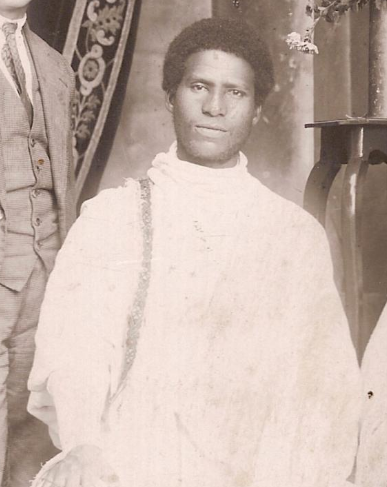
a single photograph taken in Ethiopia, memories passed down through relatives, and the knowledge that he had died somewhere in Italy during exile. Their efforts uncovered the first official records relating to Haile's imprisonment and death. By combining archival evidence with memoirs and testimonies written by fellow detainees, it became possible to reconstruct not only one family's story but also that of many others that had remained hidden for generations.
Descendants from many families began contributing documents, photographs, oral histories, letters, and memories. Scholars and historians studying fascist Italy, colonialism, imprisonment, and East African history joined these efforts. What began as an individual family quest evolved into a collective project of recovery and remembrance.
In August 2025, descendants of prisoners, including the only known surviving child of a detainee, traveled to Sardinia and returned to Asinara for the first time in eighty-eight years. The gathering included visits to sites of imprisonment, memorial ceremonies in Sassari, and meetings with local authorities and institutions. The occasion marked not only a return to a place of suffering, but also the beginning of a new partnership dedicated to preserving and commemorating this shared history.
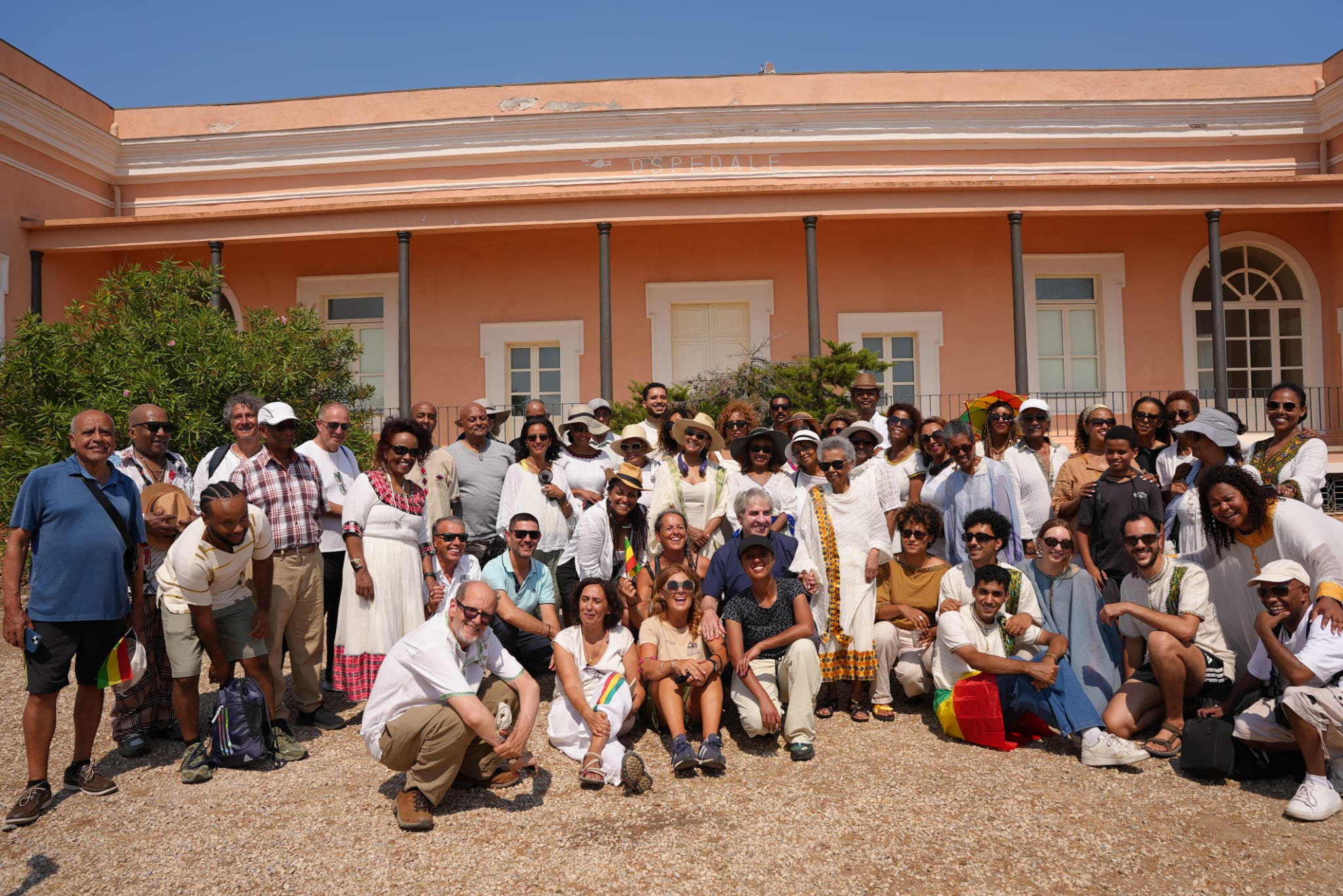
Shortly thereafter, From Oblivion to Memory was formally incorporated as a nonprofit organization to continue and expand this work.
The organization currently works in active collaboration with descendants and families of prisoners, historians and scholars of fascist Italy and colonial East Africa, archivists and researchers associated with the Campi Fascisti project, and institutions in both Ethiopia and Italy dedicated to preserving this history. FOM has also begun developing relationships with the Asinara National Park Authority, the Municipality of Porto Torres, the Autonomous Region of Sardinia, the Fondazione di Sardegna, and a growing network of educational and cultural partners committed to remembrance and public history. These partnerships seek to ensure that the history of the prisoners is preserved with rigor, dignity, and international cooperation.
Looking to the future, FOM envisions a permanent and publicly accessible record of the prisoners' lives based on documents and testimonies to help publications, translations, exhibitions, expanded educational programming, and scholarly collaborations that will firmly establish this history within both Ethiopian and international historical memory.
Among its most important goals is the creation of a memorial on the island of Asinara honoring the Ethiopian prisoners who lived, suffered, and died there. Developed in partnership with Sardinian institutions and local authorities, this memorial would serve not only as a place of remembrance for descendants and families, but also as a site of education and reflection on the consequences of fascism, racism, colonialism, and historical injustice.